

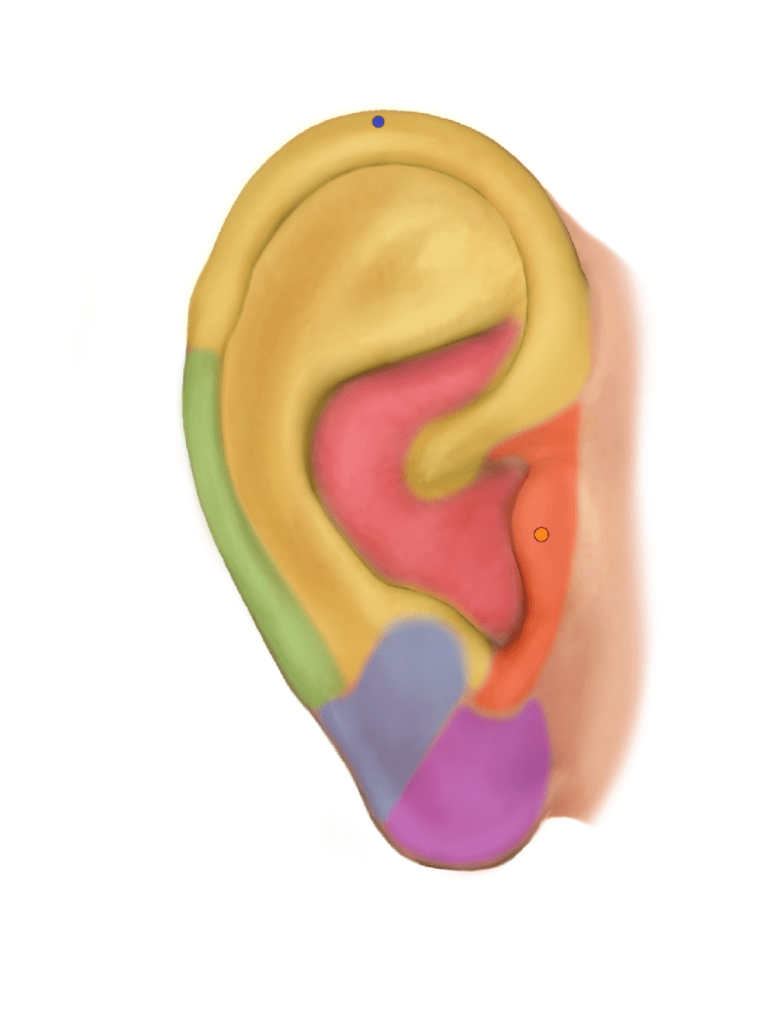
-Ear Acupuncture
-Needle-free Electroacupuncture is also available
-Pain relief (head, neck, back, spine and all joints)
-Weight control
-Quitting smoking
-Chronic fatigue
-Sleep problems
-Stress (incl. exam stress of students)
-Anxiety
-Allergic disorders
-Functional disorders, affecting immune and hormonal systems in men and women
Phone: 07521 195818
https://www.instagram.com/drgokhanguvener?
Check out Dr. Gokhan Guvener on Google!
https://g.page/Dr-Gokhan?gm
*You can call the phone number, text, use the WhatsApp link or the Google profile link above to make an appointment.
*Dr Gokhan is an Acupuncturist and ENT doctor (Otolaryngologist). He is particularly interested in medical Ear Acupuncture, also known as European Auricular Acupuncture.
*Since the training in Germany, 2004, he has been successfully practising auricular acupuncture for various ailments.
*He speaks German too. (Er spricht auch Deutsch)
*Some examples of applied acupuncture protocols in our unit:
-Protocol to help reduce complaints in musculoskeletal pain (head, neck, back, spine and all joints)
-Protocol to help relieve symptoms in allergic disorders
– Appetite reducing weight loss aid protocol that increases compliance with diet and exercise programs
– Protocol to assist with the decision to quit smoking
-Protocols to help fight chronic fatigue, sleep problems and stress
-“Asis” protocol to help relieve anxiety disorders such as stress due to past traumatic events, or exam stress.
*Detection and Microcurrent electroacupuncture device, by the French company Sedatelec, is used in diagnosis and treatment, magnetic Acupuncture needles, known as ASP, are used.
*Besides, Electroacupuncture is applied for patients who are afraid of needles or do not prefer them.
*You can read more detailed information about acupuncture practice in the following article.
What is acupuncture and what is not?
First of all, it should be kept in mind that acupuncture is not an alternative to modern medicine in the diagnosis and treatment of diseases; it is a complementary medicine method that positively affects the treatment process in some diseases, reduces troubles, and relieves symptoms.
It is important that the diagnosis and treatment methods such as examination, laboratory, and imaging offered by modern medicine, which constantly updates itself with renewed findings, experimental research, a meta-analysis of study data, should be taken as the first place in all health-related processes.
Acupuncture is thought to be more effective in disease pictures, which are also known as functional disorders, which are accepted to have psychosomatic components. In other words, it is accepted to have an effect that paves the way for this process in diseases where the body’s self-repair mechanism is in question.
In this case, the question may arise whether the effect is solely from placebo. However, many studies show that treatment efficacy does not consist of a placebo.
Acupuncture is widely used both together with other disciplines and independently in the most developed countries of Europe in terms of medicine. There are acupuncture centers in major medical faculties – clinics in the USA and the world.
Chi is obtained from three primary sources:
1. Congenital Chi comes from birth and genetic inheritance to us. This form we take from our parents creates our main structure, strength, and vitality.
2. Respiratory Chi. It is a renewable and storable form of energy. It is taken through the nose and lungs. Quality air and quality breathing are key to this form of Chi.
3. Chi has taken through food. Good and quality nutrition constitutes the basis of this form.
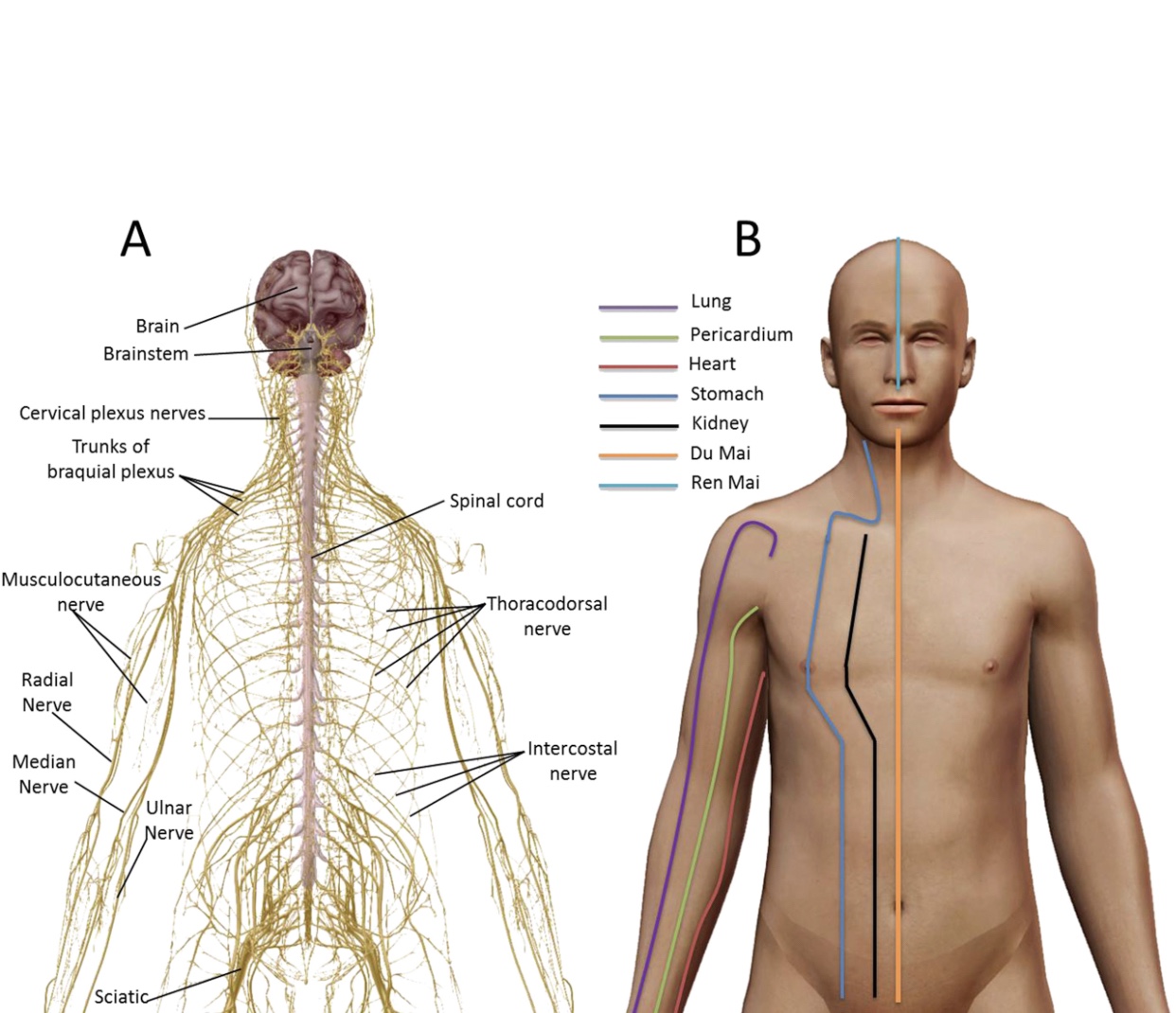
Chi flows through energy paths-channels called meridians, which have no equivalent in modern medicine. It is thought that the disorders are treated by giving stimulations through methods such as special needles, electric current or laser application from areas called acupuncture points on the meridians. There are many findings in ancient Egypt, in the records of Hippocrates, and eastern medicine for similar methods.
Although various western schools that started and spread especially in France and Germany in the 1950s, the interest of modern medicine in this traditional understanding gains momentum with an incident in 1971. The visit of the US President Nixon to China on this date is followed with great interest in the bipolar world of the time. James Reston, the famous reporter of the New York Times on the delegation, suddenly develops acute appendicitis and is urgently operated in a hospital in Beijing. Post-operative pain is treated with needles applied by an acupuncturist, accompanied by the translation of the Chinese Foreign Minister. The fact that Reston wrote this process and the relief he experienced after the treatment in his newspaper and that the world newspapers published these developments cause great interest. Acupuncture, which was applied mainly in Far Eastern countries such as China, Japan, and Korea until then, started to be used widely in many countries at the end of this process.
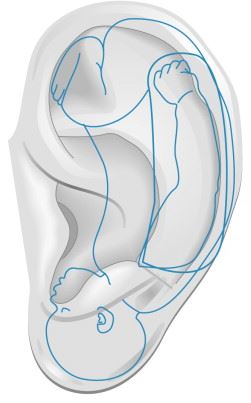
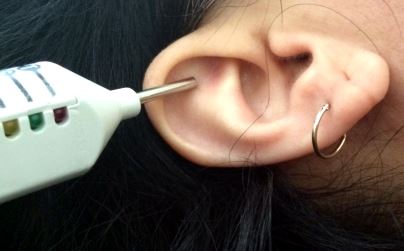
In many countries, ear acupuncture is supported and applied by state health institutions under the name of NADA protocol in addiction treatment, and in some countries, it is paid by health insurance for some indications. An auricular acupuncture protocol known as the Battlefield Acupuncture is used in the US military as a pain reliever by trained military medical staff on battlefields.
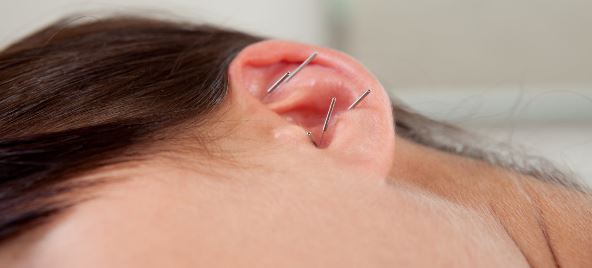
The effectiveness of acupuncture is clear, but how this activity takes place has not been scientifically explained and theories have been put forward on this issue. The prevailing opinion is that there is an interaction between the auricle and the spinal and cranial nerves. Reticular Formation, Thalamus, Hypothalamus, and cortex are reached by stimulating the auricle. Somatic, visceral, and hormonal responses are thought to be obtained with cortico-spinal, Thalamo-spinal, and Reticulo-spinal reflex responses. According to these theories, anti-inflammatory (reducing inflammation), analgesic (pain reliever), immune modulator (immune stabilizer), sedative, hormones, and metabolism balancing effects may occur.
World Health Organization: WHO lists a wide variety of diseases or disorders for which acupuncture therapy has been tested in controlled clinical trials.
(Acupuncture: Review and Analysis of Reports on Controlled Clinical Trial, World Health Organization Press, 2002)
According to the WHO article linked above, the diseases or disorders for which acupuncture therapy has been tested in controlled clinical trials reported in the recent literature can be classified into four categories as shown below.
1. Diseases, symptoms or conditions for which acupuncture has been proved— through controlled trials—to be an effective treatment:
Adverse reactions to radiotherapy and/or chemotherapy
Allergic rhinitis (including hay fever)
Biliary colic
Depression (including depressive neurosis and depression following stroke)
Dysmenorrhoea, primary
Epigastralgia, acute (in peptic ulcer, acute and chronic gastritis, and gastrospasm)
Facial pain (including craniomandibular disorders) Headache
Hypertension, essential
Hypotension, primary
Induction of labour
Knee pain
Leukopenia
Low back pain
Malposition of fetus, correction of
Morning sickness
Nausea and vomiting
Neck pain
Pain in dentistry (including dental pain and temporomandibular dysfunction)
Periarthritis of shoulder
Postoperative pain
Renal colic
Rheumatoid arthritis
Sciatica
Sprain
Stroke
Tennis elbow
2. Diseases, symptoms or conditions for which the therapeutic effect of acupuncture has been shown but for which further proof is needed:
Abdominal pain (in acute gastroenteritis or due to gastrointestinal spasm)
Acne vulgaris
Alcohol dependence and detoxification
Bell’s palsy
Bronchial asthma
Cancer pain
Cardiac neurosis
Cholecystitis, chronic, with acute exacerbation
Cholelithiasis
Competition stress syndrome
Craniocerebral injury, closed
Diabetes mellitus Type 2
Earache
Epidemic haemorrhagic fever
Epistaxis, simple (without generalized or local disease)
Eye pain due to subconjunctival injection
Female infertility
Facial spasm
Female urethral syndrome
Fibromyalgia and fasciitis
Gastrokinetic disturbance
Gouty arthritis
Hepatitis B virus carrier status
Herpes zoster
Hyperlipaemia
Hypo-ovarianism
Insomnia
Labour pain
Lactation, deficiency
Male sexual dysfunction, non-organic
Ménière disease
Neuralgia, post-herpetic
Neurodermatitis
Obesity
Osteoarthritis
Pain due to endoscopic examination
Pain in thromboangiitis obliterans
Polycystic ovary syndrome (Stein–Leventhal syndrome)
Postextubation in children
Postoperative convalescence
Premenstrual syndrome
Prostatitis, chronic
Pruritus
Radicular and pseudoradicular pain syndrome
Raynaud syndrome, primary
Recurrent lower urinary-tract infection
Reflex sympathetic dystrophy
Retention of urine, traumatic
Sjögren syndrome
Sore throat (including tonsillitis)
Spine pain, acute
Stiff neck
Temporomandibular joint dysfunction
Tietze syndrome
Tobacco dependence
Tourette syndrome
Ulcerative colitis, chronic
Urolithiasis
Vascular dementia
Whooping cough (pertussis)
3. Diseases, symptoms or conditions for which there are only individual controlled trials reporting some therapeutic effects, but for which acupuncture is worth trying because treatment by conventional and other therapies is difficult:
Chloasma
Choroidopathy, central serous
Colour blindness
Deafness
Hypophrenia
Irritable colon syndrome
Neuropathic bladder in spinal cord injury
Pulmonary heart disease, chronic
Small airway obstruction
4. Diseases, symptoms or conditions for which acupuncture may be tried provided the practitioner has special modern medical knowledge and adequate monitoring equipment:
Breathlessness in chronic obstructive pulmonary disease
Coma
Convulsions in infants
Coronary heart disease (angina pectoris)
Diarrhoea in infants and young children
Encephalitis, viral, in children, late stage
Paralysis, progressive bulbar and pseudobulbar

 On Acupuncture and Otolaryngology