

Dr. Gokhan Guvener
Otorhinolaryngologist-Head and Neck Surgeon, Acupuncturist
Tel: 07521 195818
http://www.drgokhanguvener.com
https://www.instagram.com/drgokhanguvener?

Turbinate hypertrophies (growths) are common causes of nasal obstruction.
There are three turbinates on the lateral walls of both nasal cavities as lower, middle, and upper. These organs, which extend into the nasal cavity in the form of a half C, are covered with a layer of bone on the inside, a layer of vessels around it, and an expansive layer and a cover called mucosa on the outside.
The lower turbinates direct the airflow, allowing it to come into contact with a larger mucosal surface. They filter, humidify, warm the inhaled air and make it suitable for the lower airways and lungs. The middle turbinates predominantly protect the sinus drainage tracts and assist in air circulation. The upper turbinates are thought to protect the olfactory region.
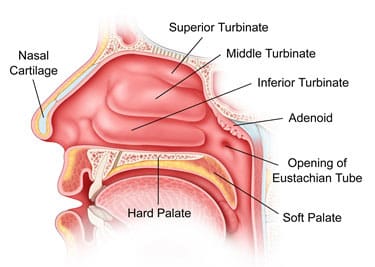
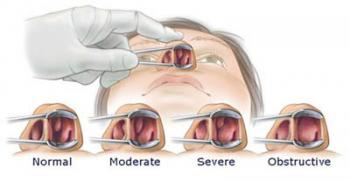
The turbinates contain dense vascular networks and can vary in size with their expansion. Their prominent growth leads to nasal congestion and lowering respiratory quality.
A natural physiological condition called nasal loop is the most common cause of concha swelling. In this cycle, which usually lasts 4-6 hours, while the turbinates on one side are normal in size, the other side swells and this process continues by changing sides. This is thought to contribute to the functions of the nose. The turbinate dimensions change according to the temperature, humidity, and pollution of the outdoor air. In other words, thanks to the properties of the turbinates, the nose functions not as a fixed airway, but as a dynamic airway that changes according to external conditions and is constantly kept under control.
Apart from natural physiological conditions, the growth of turbinates due to various diseases is also a serious health problem. If the nasal septum has deviated to one side, compensatory growth is usually seen on the opposite inferior concha. Apart from this, growths due to allergies and growths due to colds are also common. It can also be seen as a side effect of various drugs due to non-allergic rhinitis, active or passive smoking, exposure to polluted air and chemicals.
The presence of air cells in the middle conchas that should not normally be present leads to a condition called concha bullosa. In this case, the concha may swell and obstruct the airway and sinus drainage path, causing problems such as headache and recurrent sinusitis. Concha bullosa can be treated surgically if necessary.
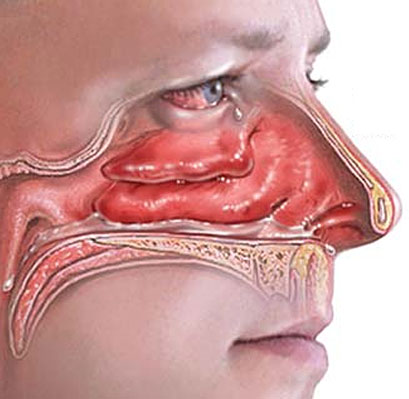
If there are allergic causes in lower turbinate hypertrophies, drug therapies for this are useful. In other cases, treatment-oriented to the cause should be preferred, if possible. Among the surgical methods, the radiofrequency application provides a reduction without disturbing the physiology of the turbinates, but regrowth can be seen in the long term. Besides, there are surgical interventions aimed at widening the passage by breaking the turbinates outward, removing the entire concha or only bone parts. However, since the radical removal of the turbinates may cause discomfort in the nose, which is characterized by bleeding, crusting, and bad odour, which is called empty nose syndrome, surgical methods should be treated conservatively as much as possible.


